
Chapter One
Organized in a settler’s home
On March 19, 1870, men and women from every direction gathered at the home of John Sundin to organize a congregation.
- Organized
- March 19, 1870
- Where
- The Sundin home
- Roots
- Swedish immigrants
Pastor Lagerstrom, who served the Stockholm church, had suggested the Sundin home because it lay in the center of the settlers interested in founding a church. The meeting began about ten in the morning with two psalms from the Swedish psalmbook and ran into the late afternoon. It closed with the song “Till Verksamhet för Kristi Skull.”
“An old Swedish trunk served as a table. We owned but a few cups, so each took their turn at drinking coffee.”
Some came on foot and Pastor Lagerstrom on horseback. In the early years he visited once a month, and services were held in members’ homes. Pastor Mike Nelson’s 2007 history gives the early name as Swedish Evangelical Lutheran Church at Crow River, and records a summer parochial school and catechism taught in Swedish.
The congregation’s history is closely tied to the Knapp community, where the church is still known as Knapp Church.
North Crow River Lutheran Church history, written around the congregation’s 125th anniversary, pages 2–3 and 23; Pastor Mike Nelson, Annandale History Club, 2007 (opens in a new tab)
Chapter Two
The first churches
A voluntary subscription raised $144, and a building committee of men with carpentry experience from their homeland built a log church.
J. Sundin, J. Morris, G. Sundwall and O. Sundblad built it on forty acres in Section 5, secured from the Pacific Railroad Company, on a knoll about 300 feet west of the present church. The young congregation had its trials: in October 1871 a great forest fire swept part of the settlement.
In 1881 the log church was sold and a frame church built for $1,800. It was dedicated on March 10, 1882. In 1890 the Ladies Aid paid for a bell for its tower, inscribed “Du land, du land, du land, hör Herrens ord!”, “O land, land, land, hear the word of the Lord” (Jeremiah 22:29). For almost ninety years a bellringer climbed the steep tower stairs to ring it; in 1979 a rope was attached so it could be rung from the balcony.
When the congregation ended its shared pastorate with Cokato, it built its first parsonage, finished in the fall of 1893. Rev. E. Norsen was the first resident pastor.
The church buildings
- 1870sA log church on a knoll about 300 feet west of the present church.
- 1881A frame church, dedicated March 10, 1882. Its bell was installed in 1890.
- 1893The first parsonage.
- 1903The present brick church, dedicated November 20, 1903.
North Crow River Lutheran Church history, written around the congregation’s 125th anniversary, pages 3–6


Chapter Three
Across the river
By 1890, many settlers lived north of the Crow River, and there was no bridge.
Crossing could be difficult, depending on the water and the ice, and people sometimes used a hanging bridge. North Crow River built a schoolhouse north of the river, and Pastor Norsen held services there twice a month. A summer parochial or Bible school divided its terms between North Crow River and the schoolhouse.
On January 7, 1898, twelve men petitioned to organize a new congregation, and North Crow River granted permission on January 17. The new congregation called itself the French Lake Lutheran Church, known today as Grace Lutheran Church. The church history records that the two congregations went on to form one pastorate, and today they share a pastor as sister congregations.
North Crow River Lutheran Church history, written around the congregation’s 125th anniversary, pages 4–5; Pastor Mike Nelson, Annandale History Club, 2007 (opens in a new tab) (dates of the petition and permission)
Chapter Four
The present church
At the annual meeting in 1902, the congregation decided to build in brick on the north side of the old church.
Rev. A. J. Elmer had come in 1901. The new church was to measure 50 by 36 feet, with walls 16 feet high. The basement and foundation were built in 1902 and the church in 1903, for a little less than $5,000, leaving a debt of only $836. The great rocks of that foundation can still be seen from the basement, where part of a wall was left open in 1970 to show the workmanship of 1902 and 1903.
Members gave the pulpit and the altar. The Sunday School superintendent, Andrew Johnson, gave the large cross on the steeple, for $25, as a memorial from the Sunday School. On November 20, 1903, the church was dedicated by Rev. Fremling, president of the Minnesota Conference. The church history records a communicant membership then of 240, and about 400 members in all.
The windows
The stained-glass windows were a gift from C. A. Smith in memory of his father, Anders Wild, a former member of the congregation. In 1903 they cost $280. Beginning in 1992, every window was removed and completely releaded, and a small window was returned to the narthex, where it had been before 1955, and lighted. The work was finished in 1994 at a cost of $16,177.
North Crow River Lutheran Church history, written around the congregation’s 125th anniversary, pages 5, 6, 10 and 12


Music & Heritage
A pipe organ since 1908
The church history records that a pipe organ was installed in 1908, during the pastorate of Rev. Alfred Melin, at a cost of approximately $1,200.

More than seventy years later, Arthur Hurtzman and his associates completely rebuilt the organ over about three years, from 1980 to 1983. An organ concert and dedication followed on September 25, 1983, with Steve Rosenberg of St. Paul as guest organist. In the words of the church history, the organ “continues to give out its majestic tones and lends a reverent air to our services.”
Separately, the Organ Historical Society’s Pipe Organ Database identifies the instrument as the work of the Burlington Pipe Organ Company of Burlington, Iowa, and gives it a date of 1900. Organ-history research connects that firm with the organbuilder Richard Jackson, who moved to Burlington around 1899, and lists this organ among the surviving examples of its work. The church history records only the organ’s installation here in 1908.
- Installed here
- 1908
- Rebuilt
- 1980–1983; rededicated September 25, 1983
- Builder
- Burlington Pipe Organ Co., Burlington, Iowa (dated 1900 by the Organ Historical Society)
- Manuals
- 2
- Ranks & stops
- 9 ranks, 9 stops
- Action
- Mechanical (tracker)
- Great
- 8′ Open Diapason · 8′ Melodia · 8′ Dulciana · 4′ Octave
- Swell
- 8′ Violin Diapason · 8′ Stopped Diapason · 8′ Salicional · 4′ Fugara
- Pedal
- 16′ Bourdon
North Crow River Lutheran Church history, written around the congregation’s 125th anniversary, pages 6 and 11; Organ Historical Society, Pipe Organ Database (opens in a new tab) (builder, date and specification)
Chapter Five
When families came by horse
In 1910 the old church barns were replaced by a new building, 24 by 100 feet.
“When they took their family to church they had a place to put their two horses out of the cold and snow and wind, and they knew they had them and did not have to worry about them and could listen to the sermon.”
Ted Peterson’s reminiscence, written for the Cokato Historical Society in 1991, remembers the hundred-foot barn: box stalls of home-sawn lumber, ten on the north side and ten on the south, with walls high enough that one team could not reach the next. A hitch post, he wrote, was not enough, because horses could work loose and run off. He remembered the barn from Swedish summer Bible school, Rev. Melin turning a five-gallon ice cream freezer by hand for a picnic in the woods west of the cemetery, and Rev. Melin’s two horses for buggy travel between Knapp and French Lake, today’s Grace.
After the old barns came down in 1911, trees were planted on the ground, later called “Our Church Park,” and a bandstand was built there, where Peterson recalled ice cream and pop being sold at Fourth of July and midsummer picnics. By the 1930s or 1940s, when families came by car, the barn was sold and taken away.
Ted Peterson, “The Horse Barns at Knapp,” In the Midst Of, newsletter of the Cokato Historical Society, Fall 1991, reprinted in the church history (pages 24–25); North Crow River Lutheran Church history, written around the congregation’s 125th anniversary, page 6. Recollections are given as he remembered them.
Chapter Six
Through the generations
Anniversaries became the congregation’s milestones, each one an occasion to renovate, remember, and look ahead.
- 1917Eighteen names were on the congregation’s World War I honor roll. One, Lawrence Peterson, died in the war.
- 1920The fiftieth anniversary, May 29–30, with two monuments raised in the cemetery: for Pastor A. J. Elmer and for Mrs. Anna Fredrika Knapp.
- 1924A Delco-light plant was installed to light both the church and the parsonage.
- 1930The sixtieth anniversary, after renovations done with members’ donated labor. Rev. A. F. Seastrand wrote the first history of the church.
- 1930sThe Depression and the droughts of 1933 and 1934. Oats sold for eight cents a bushel, and the pastor sometimes paid members’ dues himself so they could stay on the church roll.
- 1945The seventy-fifth anniversary, with a monument dedicated to the pioneers and a second anniversary booklet.
- 1946A new parsonage, paid for by 1947 with donated labor and gifts.
- 1955The eighty-fifth anniversary. The sanctuary and basement were redecorated and a new narthex added, with Sunday School rooms, from blueprints drawn by member Karl Norberg.
- 1969North Crow River joined Grace and Redeemer in a three-point parish.
- 1970The centennial, marked by a renovation of the church.
- 1973Upon the death of Hilda Johnson, the Carl Johnson farm was bequeathed to the church.
- 1974New solid red oak pews.
- 1983The steeple was repaired and painted.
- 1989The sacristy became the church office and pastor’s study, and the choir loft was removed to restore the sanctuary to its original design.
- 1990Dan Barberg built the six-foot red cedar cross for the front of the sanctuary.
North Crow River Lutheran Church history, written around the congregation’s 125th anniversary, pages 6–12

Chapter Seven
Crow River Christmas
In 1972 a crew came from Boston, in subzero temperatures, to film a story about Christian customs in mid-Minnesota.
The film, Crow River Christmas, was part of Religious America, a series shown on national television. It centered on Arthur Christenson, whom the church history remembers as one of the congregation’s faithful and diligent members.
North Crow River Lutheran Church history, written around the congregation’s 125th anniversary, page 10
Chapter Eight
Music and worship
“Throughout the years since the organization of the congregation, music has played a vital role.”
For many years worship was in Swedish, from the Svenska Psalmboken and its choral hymns. In the 1920s the congregation turned to English and the black Hymnal. After the 1961 merger that formed the Lutheran Church in America came the red Service Book and Hymnal, and in 1979 the green Lutheran Book of Worship, still in use when the church history was written.
The first choir was organized under Rev. Hocanzon. Under Rev. Norsen it traveled to neighboring congregations to sing concerts and cantatas, and under Rev. Bongfeldt, a gifted singer and director, it flourished. Ruby Smedberg directed the choir through the 1950s, ’60s and early ’70s, including an annual Christmas Candlelight Service.
From 1979 a parish choir sang Christmas and Easter cantatas in all three churches of the parish. The 1980s brought parish dramas, a portrayal of Jesus and the disciples at the Last Supper, and in 1988 a Live Nativity by the Luther League. The church history lists organists from Rev. J. A. Levine in 1883 onward. Two of them, Rhoda Johnson Tack and Hazel Morris Benson, each played for decades.
North Crow River Lutheran Church history, written around the congregation’s 125th anniversary, pages 10–11. Practices are described as they were when the history was written.
Pastors Through the Years
Shepherds of the congregation
The church history prints portraits of the pastors who served from 1870 into the 1990s, with their years. They are shown here as printed. The printed years leave some gaps, such as 1893 to 1899, and the portrait pages are not a record of every year or of the years since. Rev. Theodore Lee’s twenty-three years were the longest of any pastor.
1870–1928
-
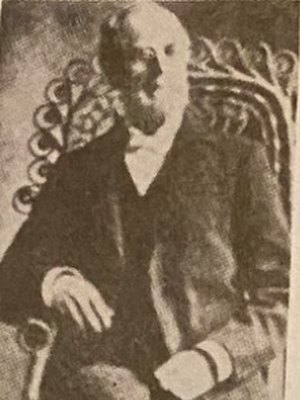
Rev. J. G. Lagerstrom1870–1872 -
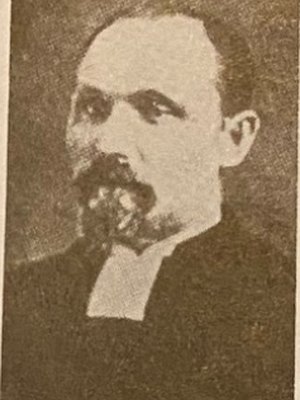
Rev. Fred Peterson1872–1877 -
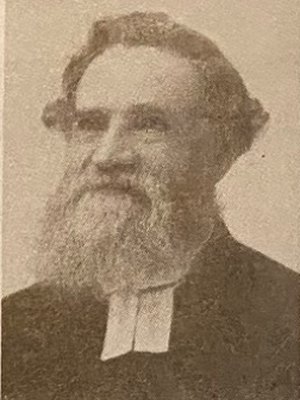
Rev. L. Hocanzon1877–1883 -
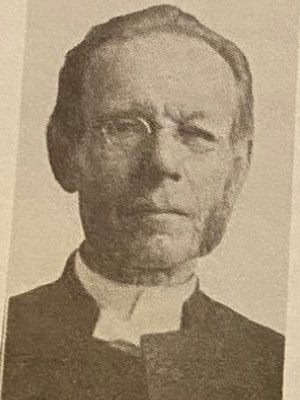
Rev. J. A. Levine1883–1893 -
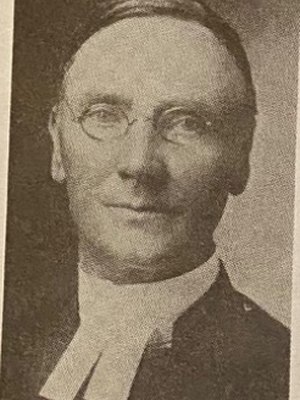
Rev. Erik Norsen1899–1900 -
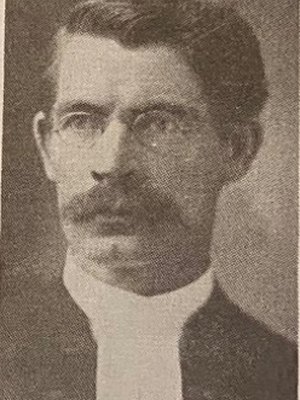
Rev. A. J. Elmer1901–1905 -
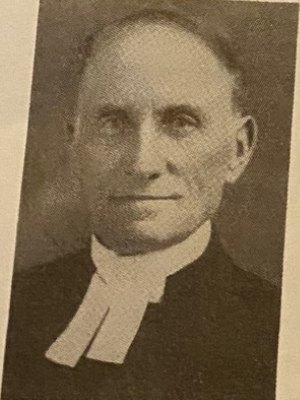
Rev. Alfred Melin1905–1917 -
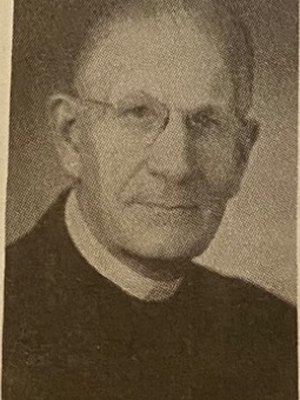
Rev. E. A. Bongfeldt1917–1924 -
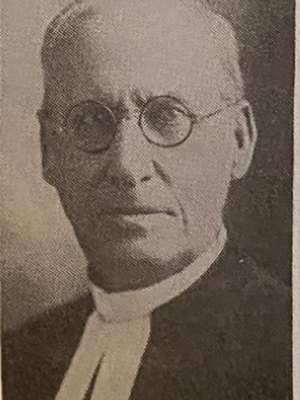
Rev. Svante Udden1924–1928


1928 into the 1990s
-
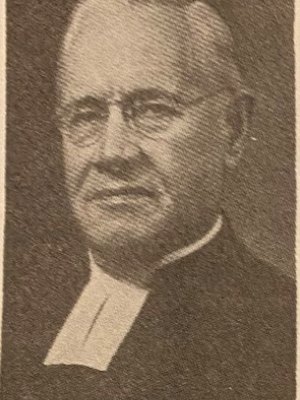
Rev. A. F. Seastrand1928–1940 -
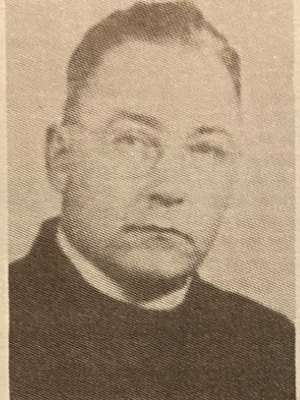
Rev. Arvid H. Larson1940–1945 -
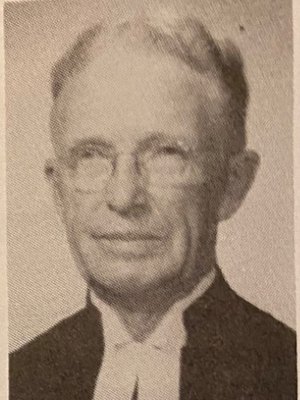
Rev. A. C. Edstrom1946–1957 -
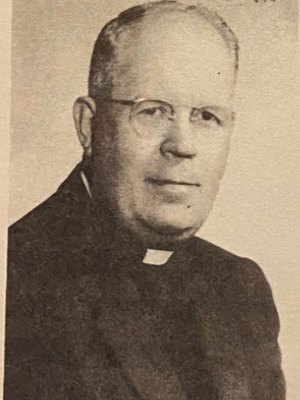
Rev. Ernest Olson1957–1965 -
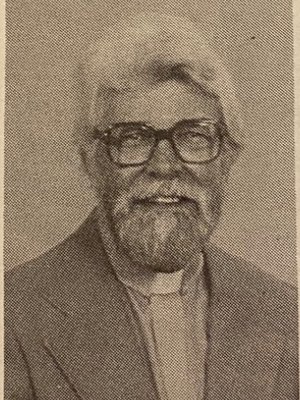
Rev. Theodore M. Lee1965–1988 -
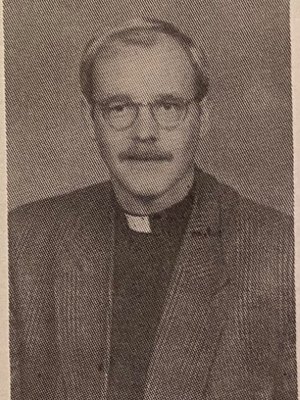
Rev. Jeffrey A. Blank1988–


Today the congregation is served by Rev. Paul Bravinder.
North Crow River Lutheran Church history, written around the congregation’s 125th anniversary: portrait pages (page 14 and the following portrait page), with the years exactly as printed.
Chapter Nine
155 Years of Faith 1870–2025
In 2025, North Crow River Lutheran Church marked 155 years since the congregation was established in 1870.
- Organized
- 1870
- 155 years
- 2025
- Today
- ELCA
Chapter Ten
An active Lutheran congregation
The congregation established in 1870 continues to gather for worship in its sanctuary today.
North Crow River Lutheran Church is part of the Evangelical Lutheran Church in America and the Southwestern Minnesota Synod’s Crow River Conference. It shares its pastor, Rev. Paul Bravinder, with its sister congregation, Grace Lutheran Church in South Haven. North Crow River worships at 8:30 a.m. on the second and fourth Sundays of each month.
Current news, photographs, and announcements are shared on the church’s Facebook page (opens in a new tab).
Worship at North Crow River Grace Lutheran Visiting the church

